The Donner DP-1 Guitar Power Supply review is for players looking to power several effects from one compact pedalboard unit.
Its mix of 9V, 12V, and 18V outputs offers flexibility, though buyers should match each pedal’s voltage and current needs to the available connections.
Donner DP-1 Review Summary
The quick verdict
7,000+ ratings
Read Amazon ReviewsDonner DP-1 Guitar Power Supply
A compact pedalboard power option for guitarists who need several 9V outputs plus dedicated 12V and 18V connections.
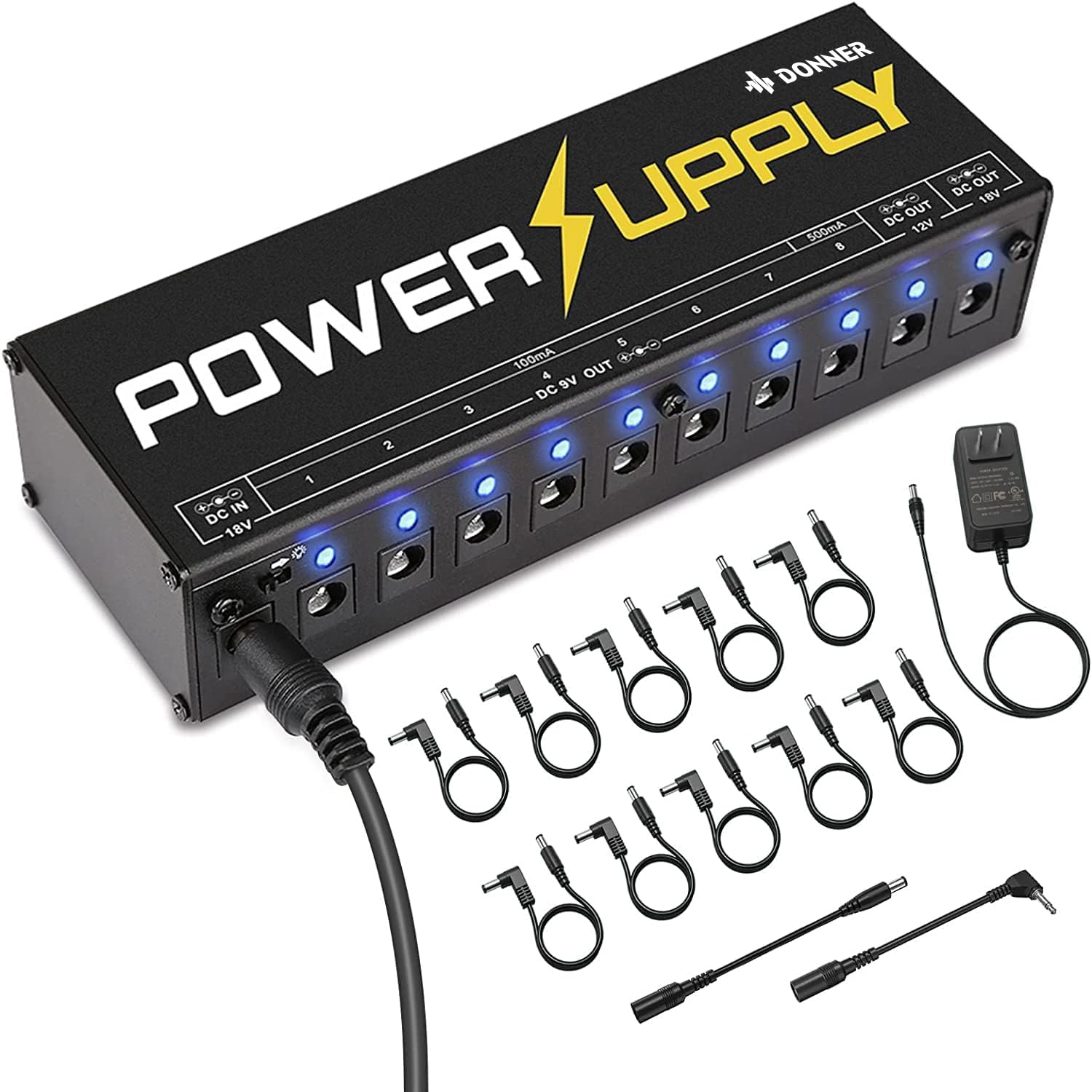
- Ten isolated outputs: seven 9V/100mA, one 9V/500mA, one 12V/100mA, and one 18V/100mA.
- AC input range of 100V–240V, with an 18V DC input.
- Independent short-circuit protection is designed to allow other outputs to continue working if one shorts.
- Noise reduction circuit design and direct-current output are intended to support quieter, stable pedal power.

Pros
- Ten connections can reduce the need for separate adapters across a multi-pedal board.
- The 500mA 9V output gives a higher-current option alongside the seven 100mA 9V outputs.
Consider before buying
- Most outputs are rated at 100mA, so pedals with higher current demands need careful assignment and may not fit this layout.
- The 12V and 18V outputs are also limited to 100mA each, restricting their suitability to pedals within those current requirements.
Read the full review summary
The DP-1 provides ten outputs: seven 9V connections rated at 100mA, one 9V connection rated at 500mA, one 12V connection rated at 100mA, and one 18V connection rated at 100mA.
It also includes ten power cables, a metal enclosure, and independent short-circuit protection intended to keep the other outputs working if one connection shorts.
That layout is a practical fit for a board with several compatible effects, especially when most need 9V and one requires a higher-current 9V output.
The two lower-current higher-voltage outputs can help accommodate pedals designed for 12V or 18V, but their 100mA ratings make checking every pedal’s requirements essential.
The buying factors
Donner DP-1 Scorecard
Editorial scores reflect listed features and buyer fit; they are not laboratory measurements or customer ratings.
Output variety
Ten outputs cover common 9V use plus one 12V and one 18V connection.
9V flexibility
Seven 100mA outputs and one 500mA output support different current needs among compatible 9V pedals.
Higher-voltage support
The dedicated 12V and 18V outputs add options, each rated at 100mA.
Board protection
Independent short-circuit protection is designed to let unaffected outputs continue working.
Portability
The compact rectangular aluminum enclosure weighs 6.9 ounces.
Setup readiness
Ten power cables are included, while pedal-by-pedal voltage and current matching remains necessary.
Key Features and Specifications of Donner DP-1
- Ten isolated outputs: seven 9V/100mA, one 9V/500mA, one 12V/100mA, and one 18V/100mA.
- AC input range of 100V–240V, with an 18V DC input.
- Independent short-circuit protection is designed to allow other outputs to continue working if one shorts.
- Noise reduction circuit design and direct-current output are intended to support quieter, stable pedal power.
- Aluminum alloy enclosure in a compact rectangular form, weighing 6.9 ounces.
- Bright blue LED indicates power and can provide light on a pedalboard.
- Ten power cables are included.
Pros and Cons of Donner DP-1
Pros
- Ten connections can reduce the need for separate adapters across a multi-pedal board.
- The 500mA 9V output gives a higher-current option alongside the seven 100mA 9V outputs.
- Dedicated 12V and 18V connections broaden compatibility for pedals that require those voltages.
- Independent short-circuit protection is designed to limit the effect of a fault on one output.
- The lightweight aluminum enclosure and included cables suit a compact board setup.
Consider before buying
- Most outputs are rated at 100mA, so pedals with higher current demands need careful assignment and may not fit this layout.
- The 12V and 18V outputs are also limited to 100mA each, restricting their suitability to pedals within those current requirements.
- The manufacturer’s isolation description includes a caveat that the outputs are not absolutely isolated in the circuit.
Who Should Buy Donner DP-1?
Good fit
Consider the Donner DP-1 if your board has several pedals with compatible voltage and current requirements and you want a single compact power unit.
Its seven 9V/100mA outputs, one 9V/500mA output, and included cables make the connection layout especially relevant for a board with a mix of modest-current pedals and one higher-current 9V effect.
Before buying, check each pedal’s voltage, polarity, connector, and current requirement against the power supply and included cables.
The output ratings are specific: the higher-voltage connections provide 100mA each, and the available description does not spell out every compatibility detail. Confirm the match for your particular pedals before relying on the setup.
The short-circuit protection and noise-reduction design may also appeal to players who want a tidier shared power arrangement. Treat these as design features rather than a guarantee of silent operation with every pedal or board.
Who should skip it
Skip this layout if your pedals collectively need output ratings beyond the listed options, or if several effects each require more than 100mA at 9V. Verify your actual current draw before choosing.
Look for a different power setup if your priority is absolute circuit isolation: the manufacturer notes that the isolation effect does not mean absolute isolation in the circuit.
Donner DP-1 Guitar Power Supply review: matching outputs to a pedalboard
Plan around current draw
The output count is useful only when each pedal is assigned to a connection that meets its requirements. Seven 9V outputs provide 100mA apiece, while a single 9V output is rated at 500mA.
List each pedal’s voltage and current draw first, then see whether the DP-1’s specific mix covers the board.
Use the higher-voltage connections selectively
The dedicated 12V and 18V outputs each supply 100mA. That can suit pedals designed for those voltages when their current demands fit, but the higher voltage alone does not establish compatibility.
Check the pedal maker’s recommended voltage and current before connecting it.
Understand the protection and isolation language
Independent short-circuit protection is intended to let unaffected outputs continue if one output shorts.
The product information also clarifies that its circuit design does not create absolute isolation, so players with strict isolation requirements should evaluate whether this design meets their needs.
Consider the physical setup
The aluminum enclosure weighs 6.9 ounces and is described as a compact rectangular box.
Ten included power cables and a blue LED add practical setup details, while the noise-reduction circuit design signals an effort to address power noise without guaranteeing the result in every rig.
Alternatives to Donner DP-1
No alternative model is recommended here. Compare the output layout, voltage, current ratings, and isolation needs that matter to your pedalboard before choosing another option.
Is Donner DP-1 Worth It?
The Donner DP-1 is worth considering for a compact board that needs multiple 9V connections, one higher-current 9V output, and occasional 12V or 18V power within the listed 100mA limits.
Its included cables, aluminum enclosure, and independent short-circuit protection add practical appeal.
Buy only after checking every pedal’s voltage and current needs against the available outputs.
The limited current on most connections and the caveat about absolute isolation are meaningful fit considerations, so this is best for a board whose requirements match the DP-1’s specific output mix.
Your review at a glance
7,000+ ratings
Read Amazon ReviewsDonner DP-1 Guitar Power Supply
A compact pedalboard power option for guitarists who need several 9V outputs plus dedicated 12V and 18V connections.
- Ten isolated outputs: seven 9V/100mA, one 9V/500mA, one 12V/100mA, and one 18V/100mA.
- AC input range of 100V–240V, with an 18V DC input.
- Independent short-circuit protection is designed to allow other outputs to continue working if one shorts.
- Noise reduction circuit design and direct-current output are intended to support quieter, stable pedal power.